
Discover an age-old Samburu tradition – the Singing Wells
Imagine standing in the middle of a dry riverbed in remote Northern Kenya as an ancient ritual unfolds before your eyes. It is a ceremony so sacred you’re not allowed to photograph it – instead, the invitation is to simply be in the moment and commit its rhythms and melodies to memory.
At Sarara, guests have the rare opportunity to witness this centuries-old tradition, offering a window into one of the continent’s most well-preserved cultures. As an experience few outsiders ever see, the Singing Wells are unique to Samburuland – and provides a glimpse into the profound relationship between Indigenous people, their livestock, this arid landscape and its wildlife.
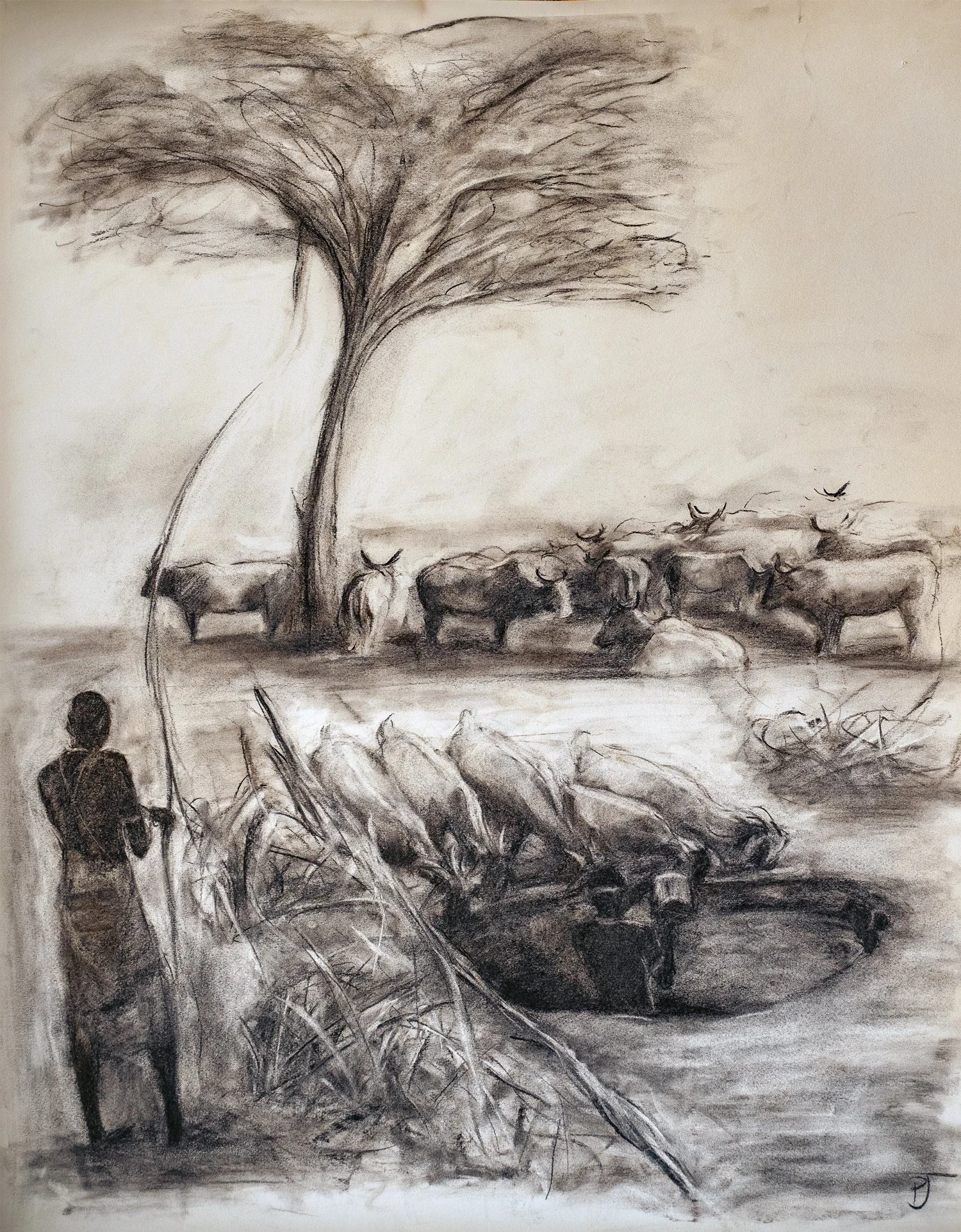
In a land where water is precious and particularly scarce during the dry season, survival depends on knowing exactly where to find it. The Samburu have perfected this skill over generations, and each day in the dry months, dusty riverbeds are transformed into hubs of activity as morans (warriors) set to work digging wells up to ten metres into the earth in search of underground water sources to sustain their herds.
With remarkable skill and coordination, two to as many as eight morans form human chains, passing buckets of hard-won water hand-to-hand until it reaches the surface. There, it is poured into troughs carved from hollowed tree trunks, providing vital nourishment for cattle, goats and camels. It is an awe-inspiring feat of teamwork and endurance – part ritual and part practical.
Sketch by Polly James
Water, life and song
But what stays with visitors most is that throughout this process, the morans’ voices rise from the depths in melodic, haunting chants, setting the rhythm for digging and passing the water to the top.
Even more impressive is that each family has its own unique song calling their livestock to drink, and the chants are so distinct that every animal recognises its owner’s melody. This ensures the herds drink in order without mixing, and as one herd finishes, the melody shifts, signalling the next group to approach. It’s a perfectly choreographed dance between humans, animals and nature.
For first-time visitors, the Singing Wells can seem almost mythical; and some guests initially even think the wells themselves are producing the haunting sounds. It makes it all the more remarkable to then discover that the melodies come from the morans – an extraordinary blend of survival, tradition and music.
Beyond the physical labour and song, the wells are also a vital social gathering space for families to exchange stories and share news. And after the morans and their herds move on, wildlife visit the wells to drink. Elephants, giraffes, leopards and other species share the same water sources – a testament to centuries of harmonious coexistence between the Samburu and the wildlife in this pristine wilderness.
The Singing Wells is not a tourist display – it is an opportunity to witness a living tradition that has remained unchanged for generations, reflecting the Samburu’s resilience, ingenuity and attunement to their environment. It is a once-in-a-lifetime experience: both spiritually moving and unforgettable for every sense, allowing guests at Sarara to step into an ancient exchange that celebrates people and nature in perfect harmony.
LISTEN
Guests from all Sarara’s ecolodges and camps can join this early-morning experience.
From Sarara Camp, it is a 45-minute walk, with many opting to return by vehicle as the sun rises high once they are done. From Sarara Treehouses and Reteti House, it’s a short drive. A Singing Wells experience was also recently added at Nasulu Conservancy for guests at our exclusive-use tented camp within the Wider Samburu Ecosystem – Sarara Wilderness. These excursions take place in the cool morning hours, leaving the rest of the day free for game drives, exploration or relaxation.
* Respect, privacy and cultural consideration The Samburu have always preferred not to be photographed, as taking pictures of them, their children or livestock is seen as stealing their soul.