
Samburu Women at the Forefront of Land Stewardship
For the Milk Mamas at the heart of The Sarara Foundation’s (TFS) flagship Milk to Market Program, conservation and care for the land are lived responsibilities, not imposed obligations.
With their livelihoods and the wellbeing of their communities deeply connected to the milk they provide to Reteti Elephant Sanctuary, they are driven by a commitment to nurture the health of their herds and the landscapes they depend on through far-reaching land restoration efforts that benefit people, livestock, and wildlife.
As passionate champions of sustainable grazing, the women actively support grazing compliance, report injured wildlife, and take a leading role in land restoration efforts – especially in light of prolonged periods of drought. In the past year, Milk Mamas have increasingly been at the forefront of rotational grazing plans and have taken on stronger leadership roles in rangeland health.
2025 Highlights
Where water returns, grass follows…
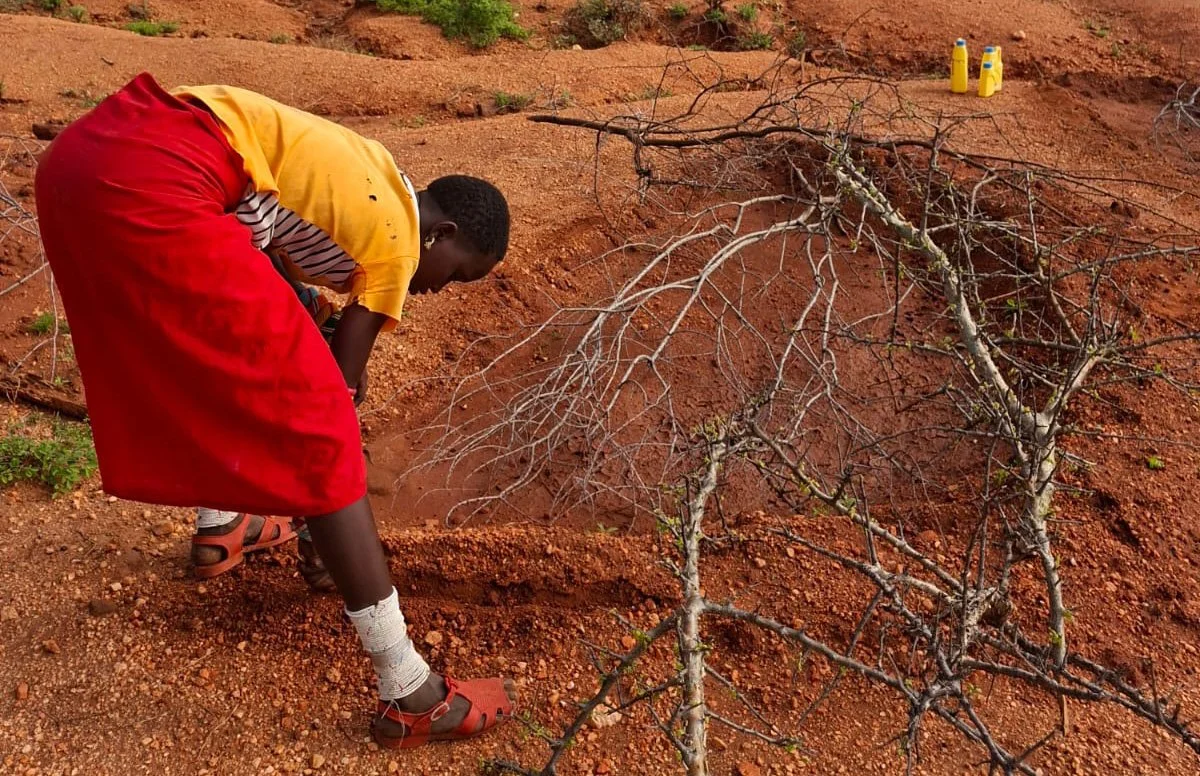
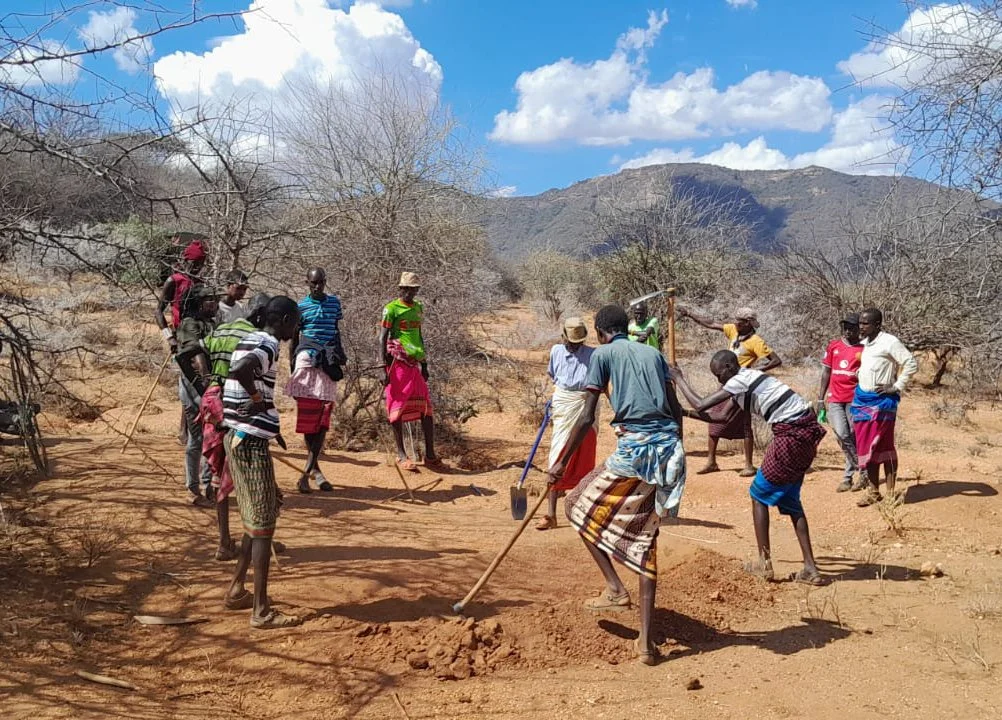
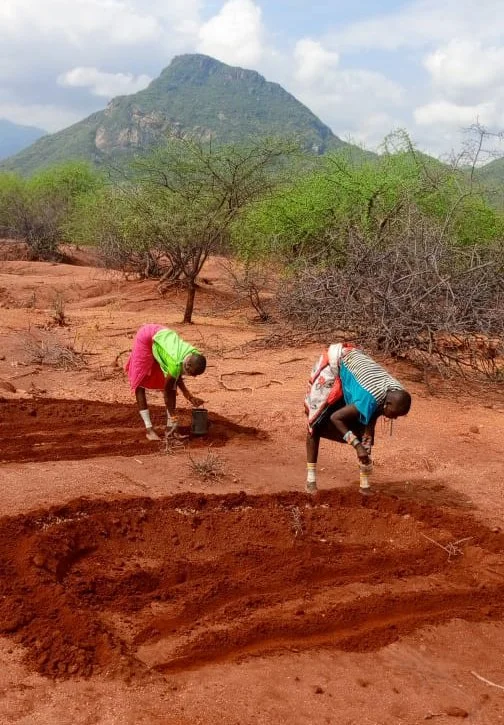
During October and November, the Lbaa community – led by 70 Milk Mamas – made significant progress in restoring 50 acres of degraded rangeland in Namunyak. Together, they established and reseeded 1,050 bunds in an area that had remained bare for years due to overgrazing, leaving it vulnerable to invasive species, soil erosion, and exposed ground.
Dug along slopes to capture rainwater, semi-circular bunds are an effective local solution for regeneration in arid and degraded landscapes. By slowing water flow and holding moisture in the soil, they create favourable conditions for new grass growth and support long-term re-greening efforts.
Two native grass species – Cenchrus ciliaris (a shrubby, perennial grass) and Eragrostis superba (a hardy, drought-resistant grass) – were selected for their resilience, complementary growth, and ability to stabilise soil and reduce erosion with minimal rainfall.
From rain to regrowth: tracking recovery to ensure success
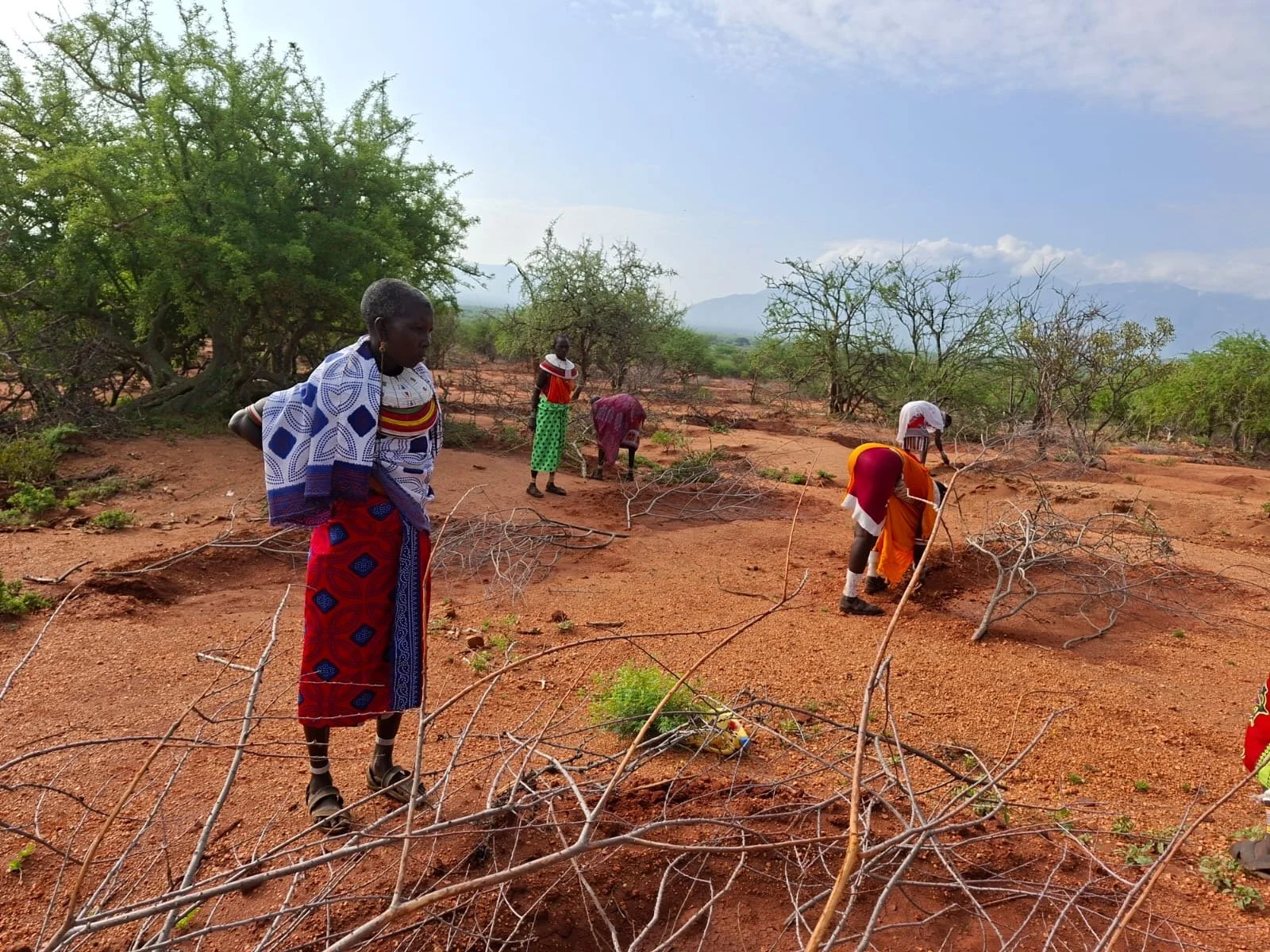
Following the completion of digging and reseeding, Milk Mamas returned to the restoration site after several days of steady rainfall to assess bund performance and early grass growth.
Ninety percent of the bunds successfully retained water or showed strong regeneration and were marked as effective. Where seeds had not germinated, bunds were promptly reseeded to ensure even recovery across the site.
This hands-on approach highlighted the value of community-led land restoration and the leadership and practical expertise of the Milk Mamas in monitoring progress and taking timely action to support successful regeneration.
Growing seeds of hope
As fresh growth began to emerge across this once-barren landscape, the Milk Mamas felt a deep sense of pride and joy. The visible recovery of the land – achieved through their own efforts – reinforced a powerful belief that restoration is not only possible, but achievable through community-led action.
Many shared that this progress strengthened their motivation to continue creating and maintaining bunds, and to protect Namunyak’s rangelands from grazing pressure in innovative, locally driven ways.
The Milk Mamas also reaffirmed their commitment, describing the new grass growth as a sign of healthier rangelands and greater long-term stability for their community. Ultimately, the project demonstrated how Indigenous-led restoration can transform degraded land into productive, resilient landscapes that support sustainable livelihoods – while inspiring lasting pride and hope among the women leading the work.
The members of the Lbaa community,
led by 70 Milk Mamas, who set out to restore degraded rangelands.
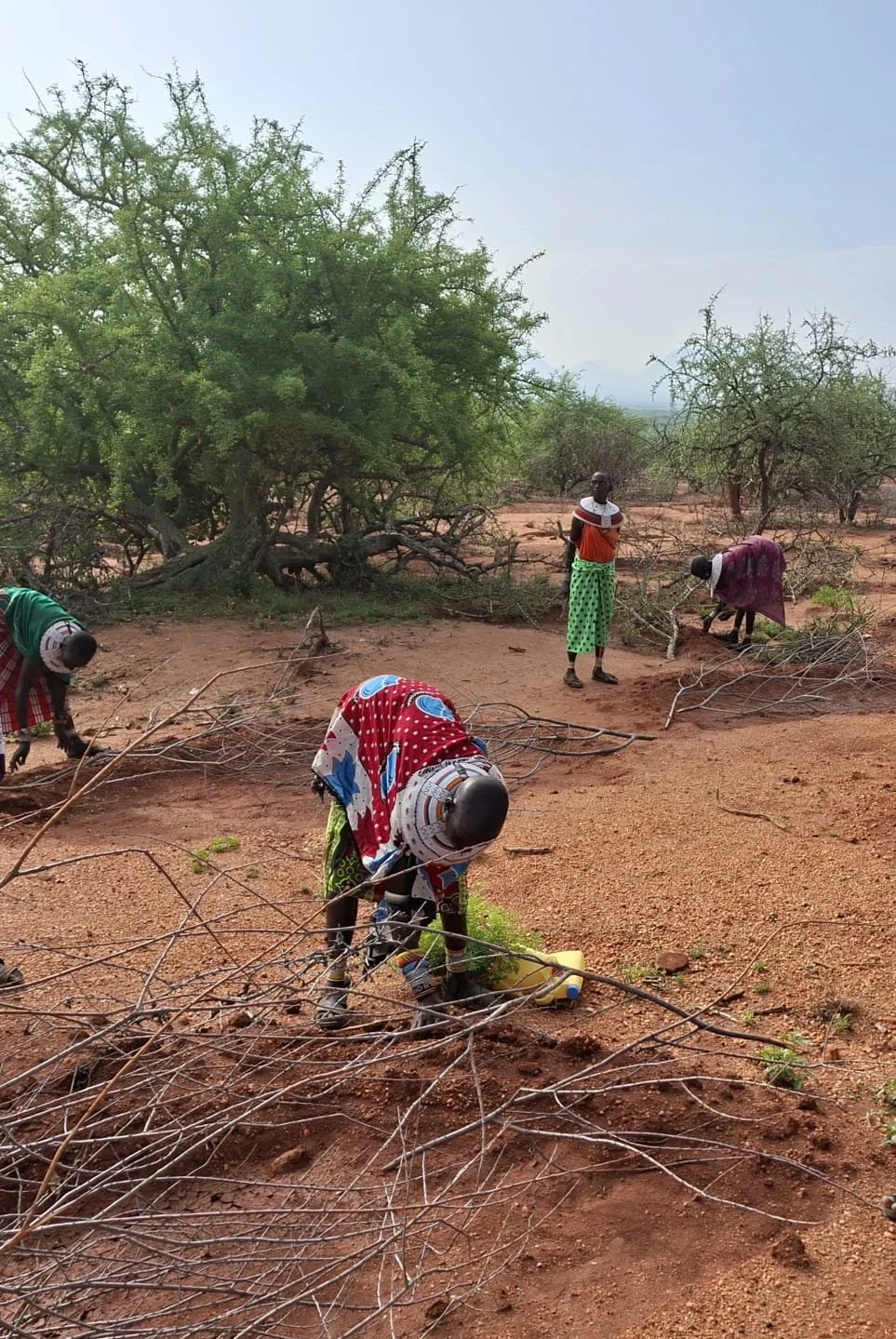
“Grass is the rock of our lives, and seeing it grow gives us hope. It is the assurance of our own survival and the future of our children. As Lbaa Milk Mamas, this restoration has made us proud as women in Namunyak, because we know we are protecting our land, feeding our goats better, and building a stronger future for our community. Reseeding this land showed us that our rangelands can heal again.”
– Staai Lemojong, Milk Mama
Future-forward training and community sensitisation
Throughout the year, Milk Mamas were supported through a range of educational opportunities designed to strengthen knowledge, skills, and understanding. A highlight was a learning visit to Reteti, where more than 150 women saw firsthand how clean, high-quality goat milk supports the health and survival of orphaned elephants, reinforcing pride in their work and the link between livelihoods and conservation.
A dedicated training drive brought together 284 women to focus on hygiene, milk quality, and herd health. The sessions strengthened production standards and supported healthier livestock, strengthening both income and the wellbeing of their herds.
Building on this momentum, workshops across nine villages engaged more than 300 Samburu community members – including men and youth – in practical demonstrations around Milk to Market and discussions on herd management, milk hygiene, and rangeland care. By combining hands-on skills with local knowledge and emphasising shared responsibility, the sessions proved tremendously helpful for maintaining healthier herds, improved milk quality, and caring for the land more sustainably.
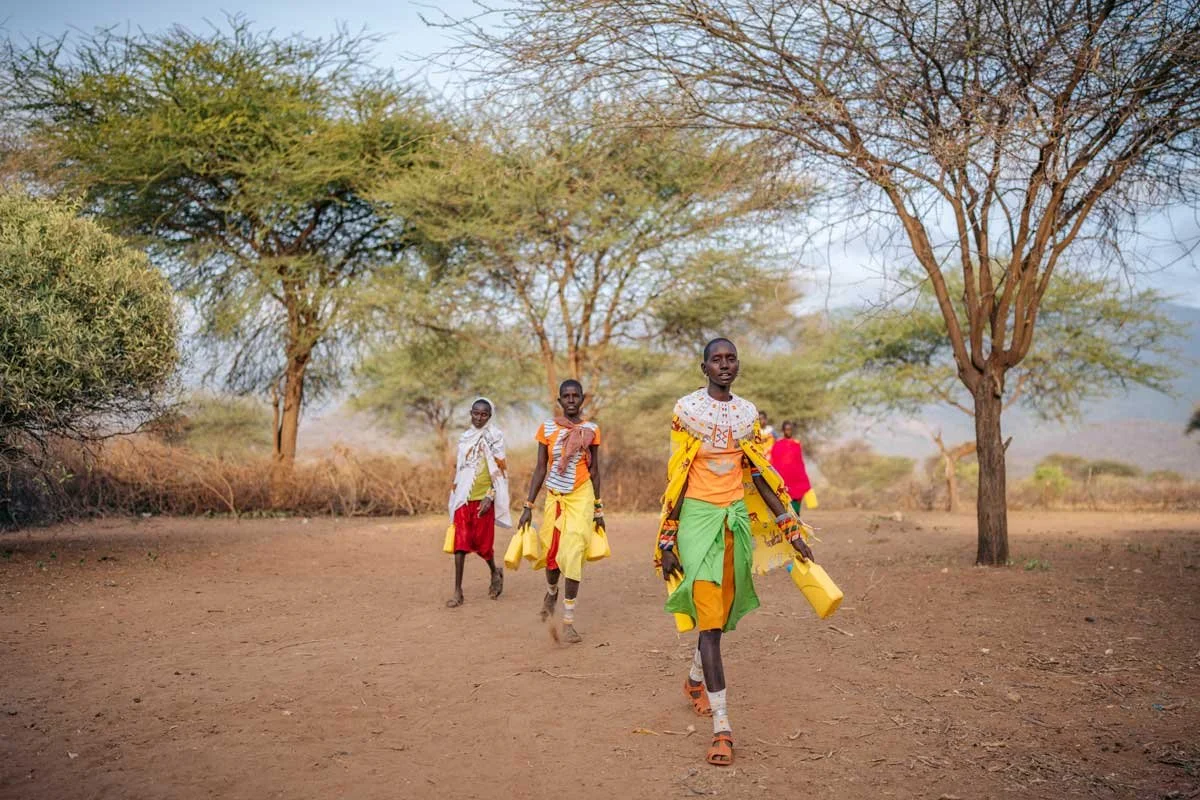
These achievements reflect the enduring core of Milk to Market: when women are empowered, conservation succeeds, communities prosper, and landscapes flourish.
Starting at a single manyatta (homestead) with a handful of women, a few goats and a few canisters of fresh milk pasteurised over open fires, the program has grown into a women-led movement that restores both land and livelihoods – securing a more sustainable future for the people, wildlife, and precious wilderness of Namunyak Conservancy.
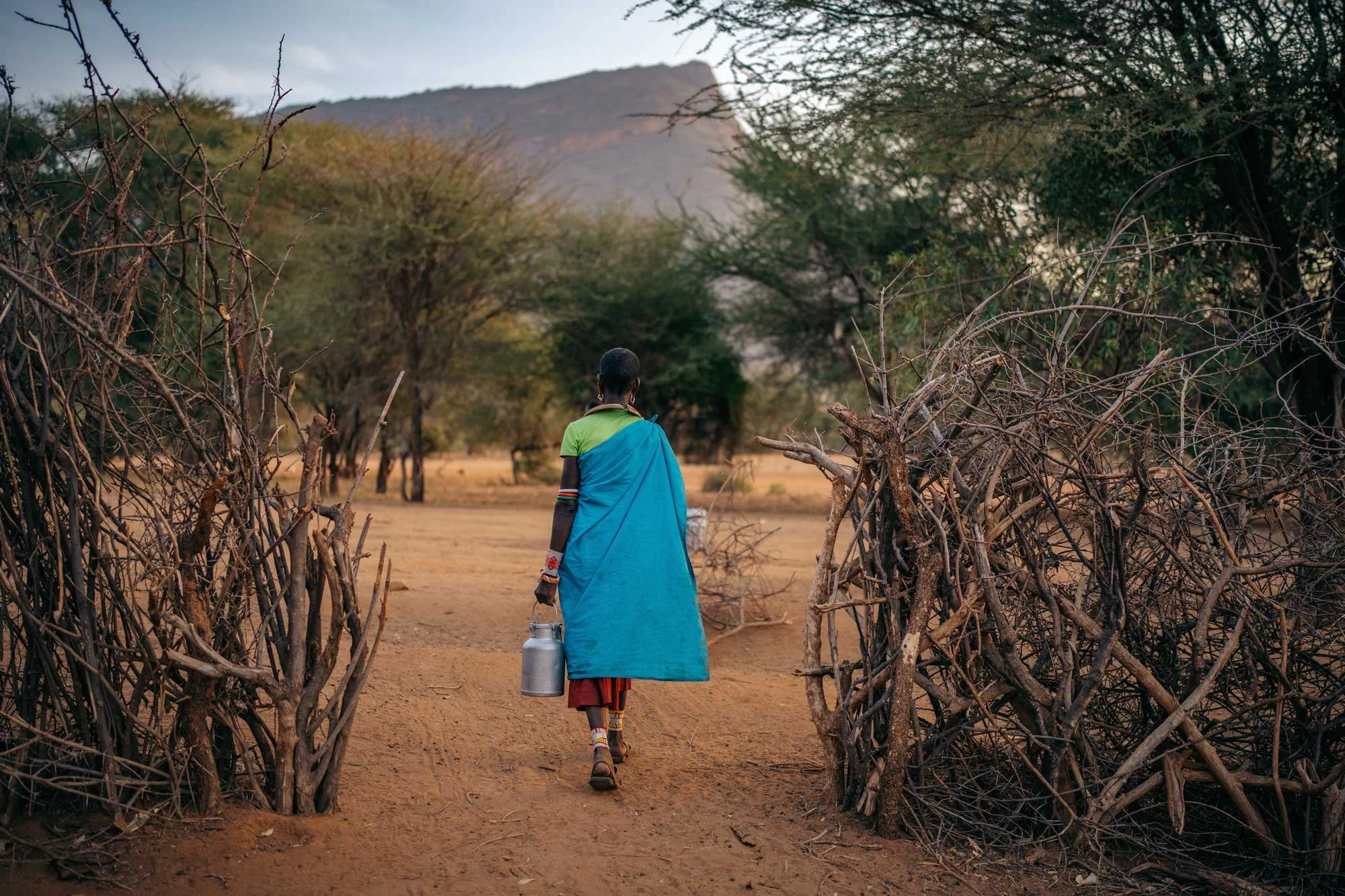
“Milk to Market has shown me that conservation works best when it puts real income into the hands of the community. Samburu women who once made no contribution to household budgets are now sole providers for their families, and over the past year I’ve seen how this income has built confidence. Women now speak up, influence household and community decisions, and champion better rangeland practices. What inspires me most about the years to come is seeing these women not just as suppliers of milk, but as leaders shaping livelihoods, conservation, and the future of the Samburu community.”
Dorcas Lolngojine, Milk Coordinator