Rare & elusive sights that await on a Sarara safari
One of the true pleasures of being on safari is the thrill of encountering creatures big and small, completely at ease in their natural habitat. At Sarara’s camps and ecolodges in the Greater Samburu Ecosystem and Namunyak Conservancy – where three decades of dedicated conservation efforts have helped the landscape and its wildlife rebound – guests soon realise they’re not surrounded by other safari-goers, but immersed in nothing but nature.
Large herds of reticulated giraffes glide gracefully between the treetops, while cheeky Grévy’s zebras often play the role of self-appointed crossing guards as you approach Sarara Camp. And then there’s the mesmerising sight of Northern Kenya’s elephants, calmly marching across the vast and ancient land that has shaped their journey for generations.
If you’re lucky – and a little patient – Sarara’s quieter corners may also reward you with a glimpse of some of the region’s more elusive characters…
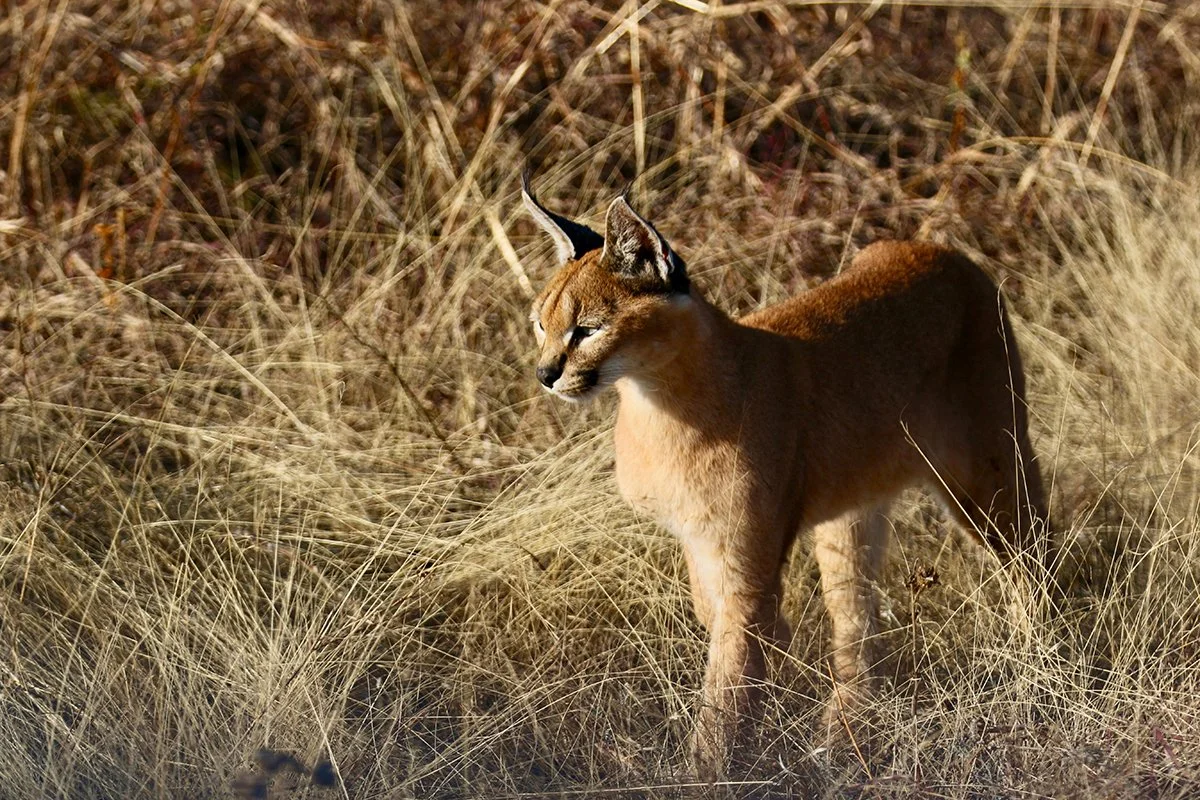
Caracal
As one of Northern Kenya’s shiest residents, this solitary cat is rarely seen during the day. Often called the desert lynx, it is strikingly beautiful, with a sleek reddish-brown coat that blends seamlessly into the dry landscapes. The caracal’s most iconic feature is its bold facial markings in the form of long black tufts crowning its ears. While their exact purpose is still debated – some believe they’re for camouflage – the most widely accepted theory is that caracals use these for ear-twitches to communicate with one another.
Known for sudden bursts of speed and remarkable agility, caracals are the largest and fastest of Africa’s small cats. They are opportunistic nocturnal hunters, taking almost any prey they can outrun or outmanoeuvre, from mongooses and rodents to hyraxes, dik-diks and monkeys – and can even bring down young kudu or impala. They’re also formidable jumpers, able to leap up to 3 metres straight into the air to swat a bird from flight.
For guests at Sarara Wilderness exploring Samburu National Reserve on daily game drives, even a brief glimpse of this remarkable cat is considered true safari gold.
African Wild Dog
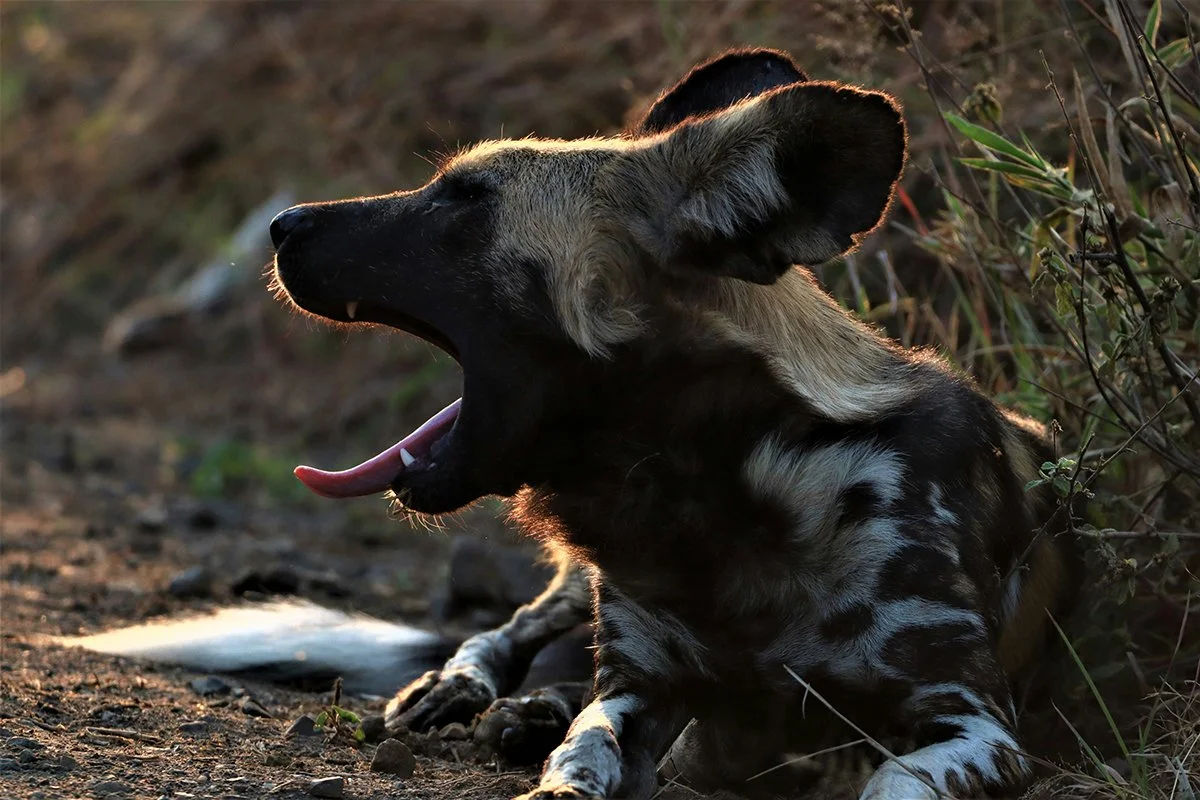
One of the highlights for Sarara’s guests is the chance to see African wild dogs – often called “painted wolves” and the largest wild canines in Africa. Listed as endangered since 1990 due to habitat loss, human-wildlife conflict and disease, they’re a central focus of local conservation efforts. Namunyak Conservancy provides a safe refuge for these rare animals, with fewer than 7,000 adults remaining across the continent.
Wild dogs are highly social, which is perhaps their greatest strength. Individually they pose little threat to prey, but as a coordinated pack, they can topple even the nimblest antelope with remarkable teamwork.
While seeing them on the hunt is a thrilling experience, watching adults feed their pups offers an endearing glimpse into their family life. Pups cannot eat solid food until around ten weeks old, so adults return to the den with softened, partially digested meals. And don’t expect any barking! Wild dogs communicate through high-pitched whines, twitters and “hoos,” especially when a pack member is separated from the rest.
Cheetah
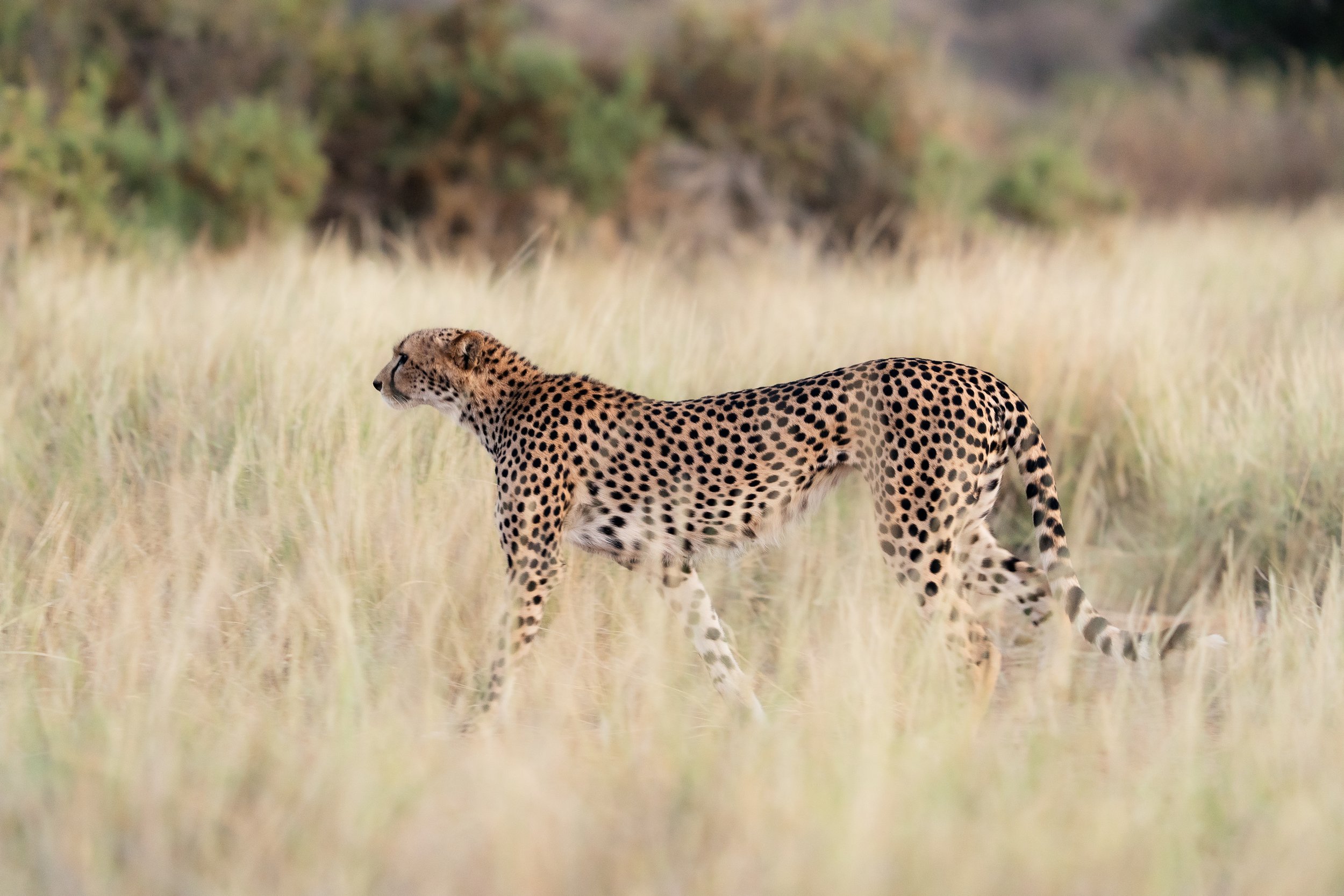
Built for speed, fast and flexible, cheetahs are the world’s quickest land animals, reaching 112 km/h in just three seconds – snappier than many sports cars. Their bodies are perfectly designed for high-octane chases, with spines that act like springs to power each stride. This speed, however, comes at a cost: cheetahs can maintain it for only 200–300 metres, and a chase typically lasts less than a minute. To avoid competition with other predators, they hunt during the day, favouring cool mornings and late afternoons.
Seeing a cheetah in the wild is more than a sighting – it’s a reminder of why protecting the species is so important. Listed as vulnerable, Kenya is a stronghold in East Africa, with 800–1,200 individuals. One of their greatest threats is high cub mortality, with around 70% lost to predation. Adults often roam outside protected areas, such as Namunyak Conservancy, where habitat loss, drought, dwindling prey and human-wildlife conflict add further challenges.
Though small – females typically weigh up to 54 kg – cheetahs leave a lasting impression. From the tell-tale “tear marks” running from their eyes to their mouths to their distinctive sounds, ranging from chirps to barks, seeing even a single cheetah up close is captivating. Witnessing more than one at a time is nothing short of mesmerising.
Bat-eared Fox
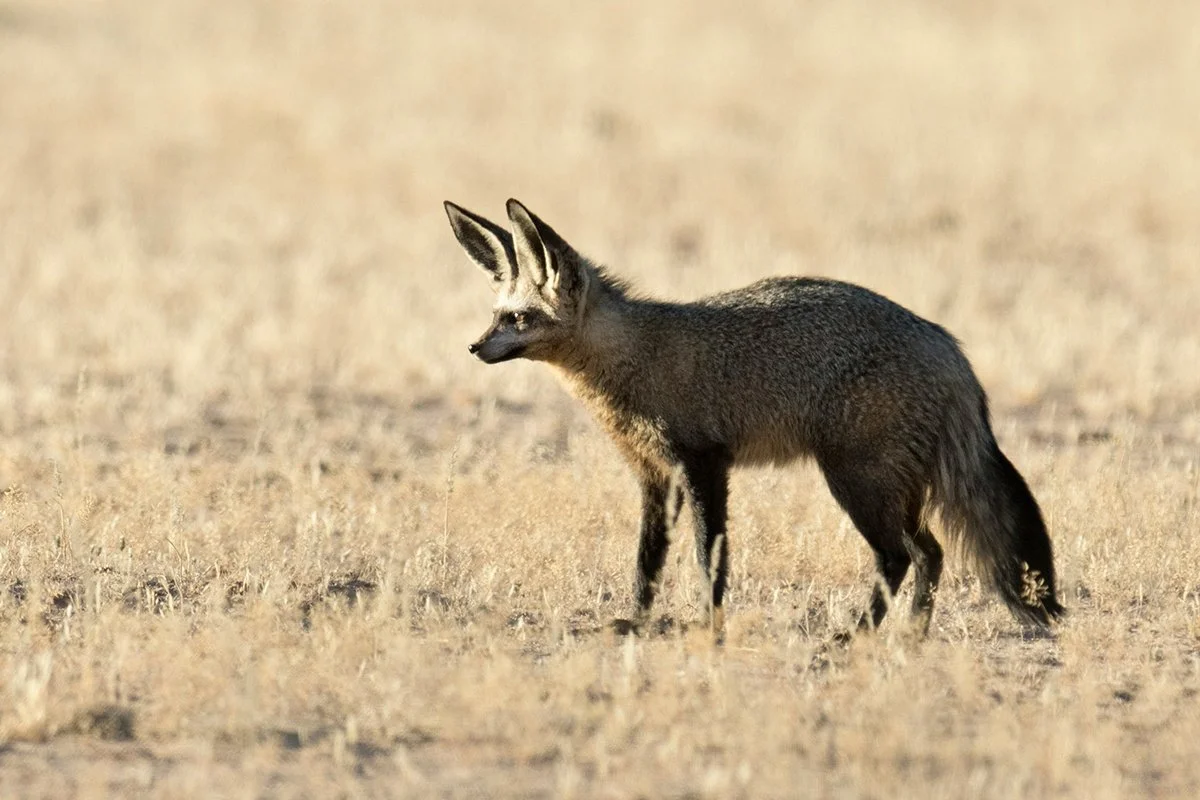
They may be widespread, but bat-eared foxes are very elusive and prefer the cover of night – making sightings a real treat for young and old. However, they’re highly social creatures, so if you spot one, others are usually close by! With their oversized, radar-dish ears, they shuffle through the grasslands foraging at night or in the early morning. In a fascinating role reversal, the females do most of the foraging – for ants, termites, spiders, scorpions, and crickets – while the males tend to parental duties back home. Their dens, dug deep into the earth, provide shelter from predators and harsh weather, and serve as nurseries for their pups.
Tracks & Tails
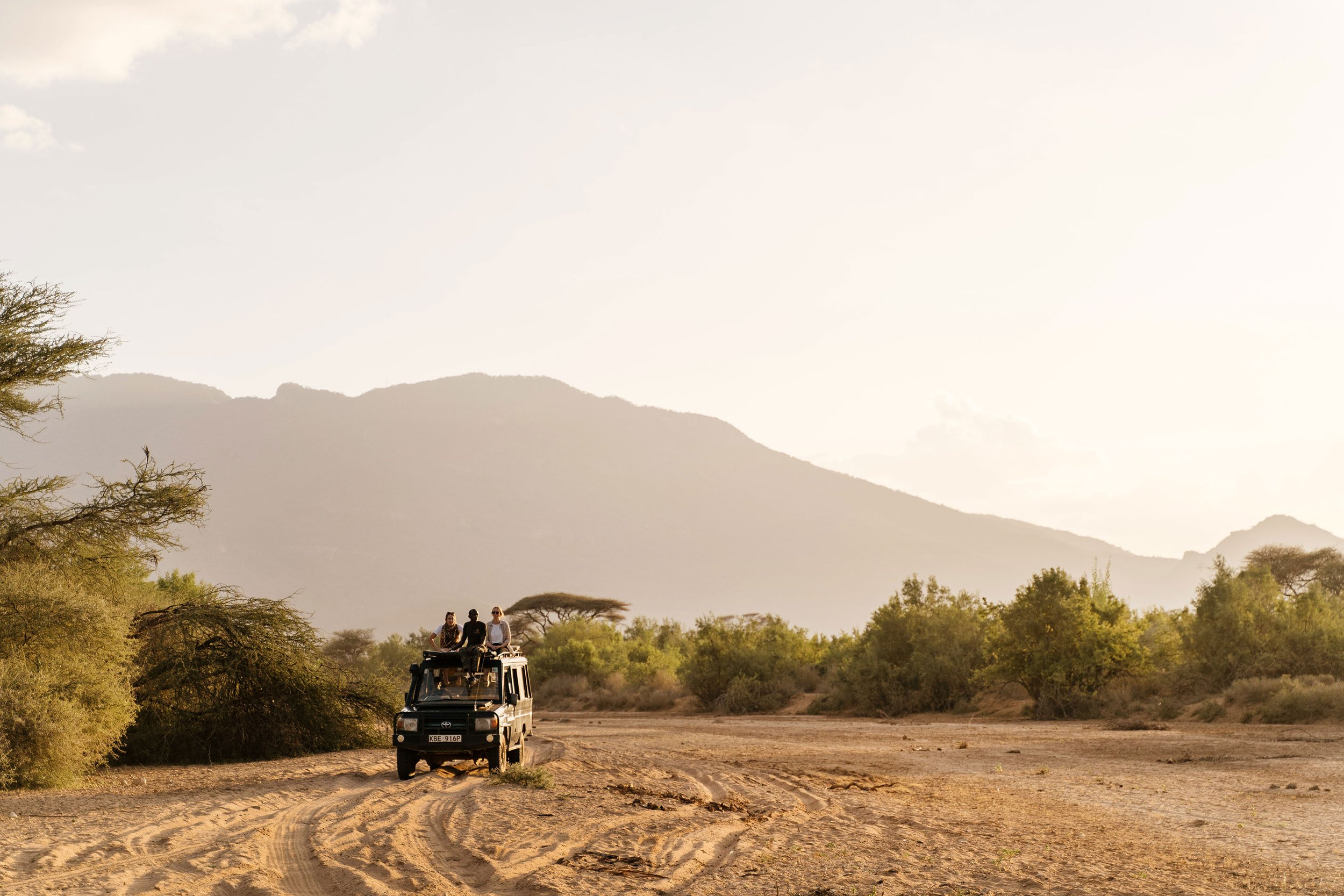
We caught up with some of Sarara’s eyes and ears on the ground to hear what they’ve been spotting lately:
Sonia Legai | Sarara Field Guide
“I’ve been so lucky with sightings recently! I’ve spotted bat-eared foxes three times – sometimes as early as 6pm – while returning from the sunset feed at Reteti Elephant Sanctuary with guests. We’ve also had wonderful civet cat sightings near Sarara Treehouses, and in the past few weeks we’ve seen African wild cats twice: once along the Reteti River and once just below Sarara Camp during evening drives.”
Tilas Lekango | Reteti House Manager
“We’ve been privileged to see so many rare species in the last few weeks – including several aardwolf sightings at both dusk and dawn. During the dry season, civet cats were seen right near Reteti House, and we even had an aardvark sighting this year.”
Kalamon Leogusa | Sarara Field Guide
“Aardvark are famously elusive, but I was lucky enough to see one on a recent game drive – close to the Namunyak Airstrip. This past season also brought several leopard sightings across the Sarara Valley in the evenings, including near the Singing Wells and Millennium Hill, just beside Sarara Camp.”
Philip Leeresh | Sarara Treehouses Manager
“Northern Kenya’s buffalo population has been steadily increasing here in Namunyak thanks to conservation success, and it’s always a thrill for our guests to see them. When herds recently wandered in to drink at the waterholes at Sarara Treehouses, Sarara Camp and Reteti House, it made our typically relaxed sunset drinks a whole lot more exciting!”
DID YOU KNOW?
Kenya’s Northern Five – also called the “Samburu Special Five” – are five species that are uniquely adapted to the arid terrain of this region.


Reticulated giraffe: Recognisable by its striking, net-like pattern of white lines separating liver-coloured patches.
Grévy’s zebra: The largest and most endangered zebra species, with narrow stripes and large, rounded ears.
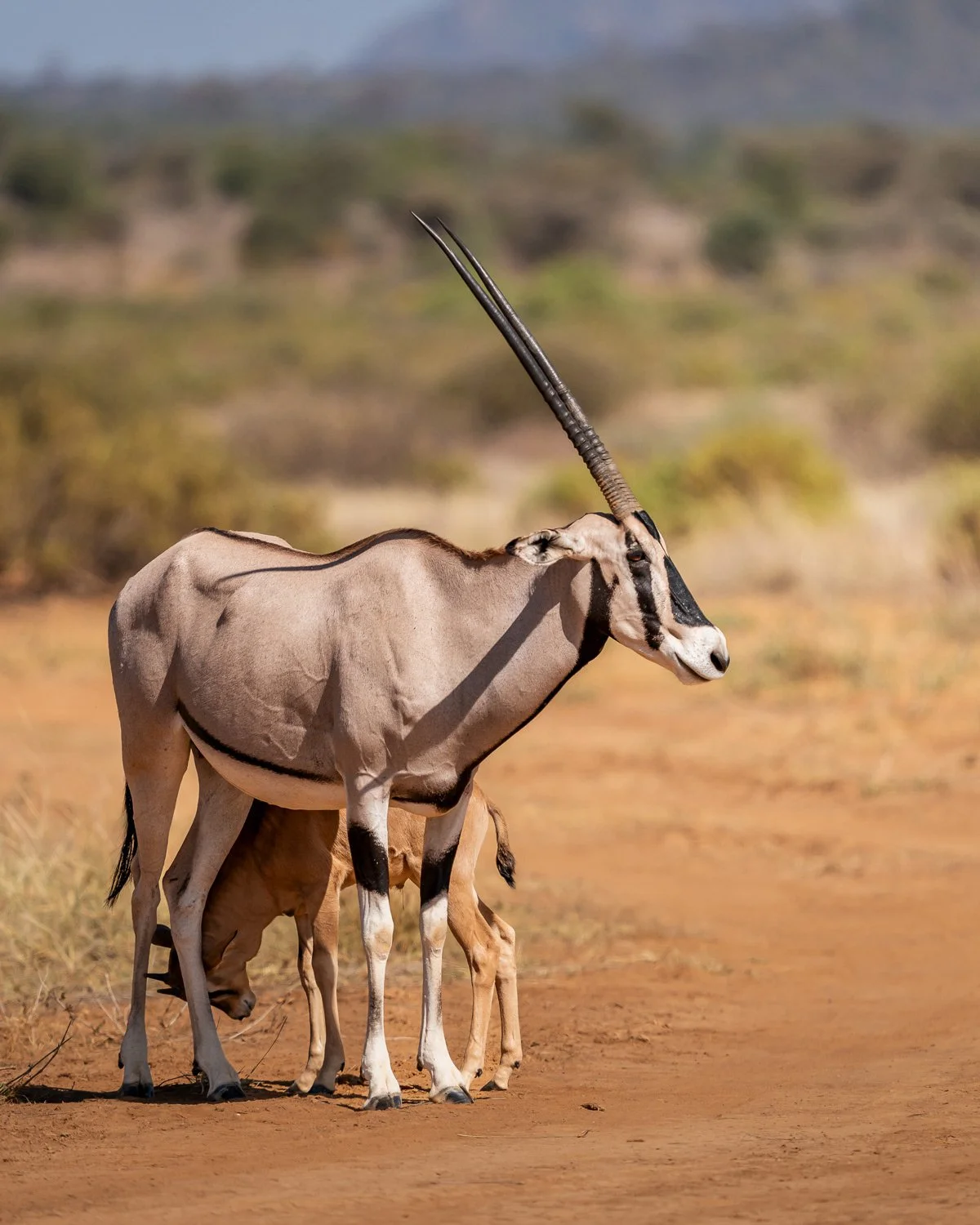
Beisa oryx: A large antelope with long, straight horns and bold black-and-white facial and leg markings.
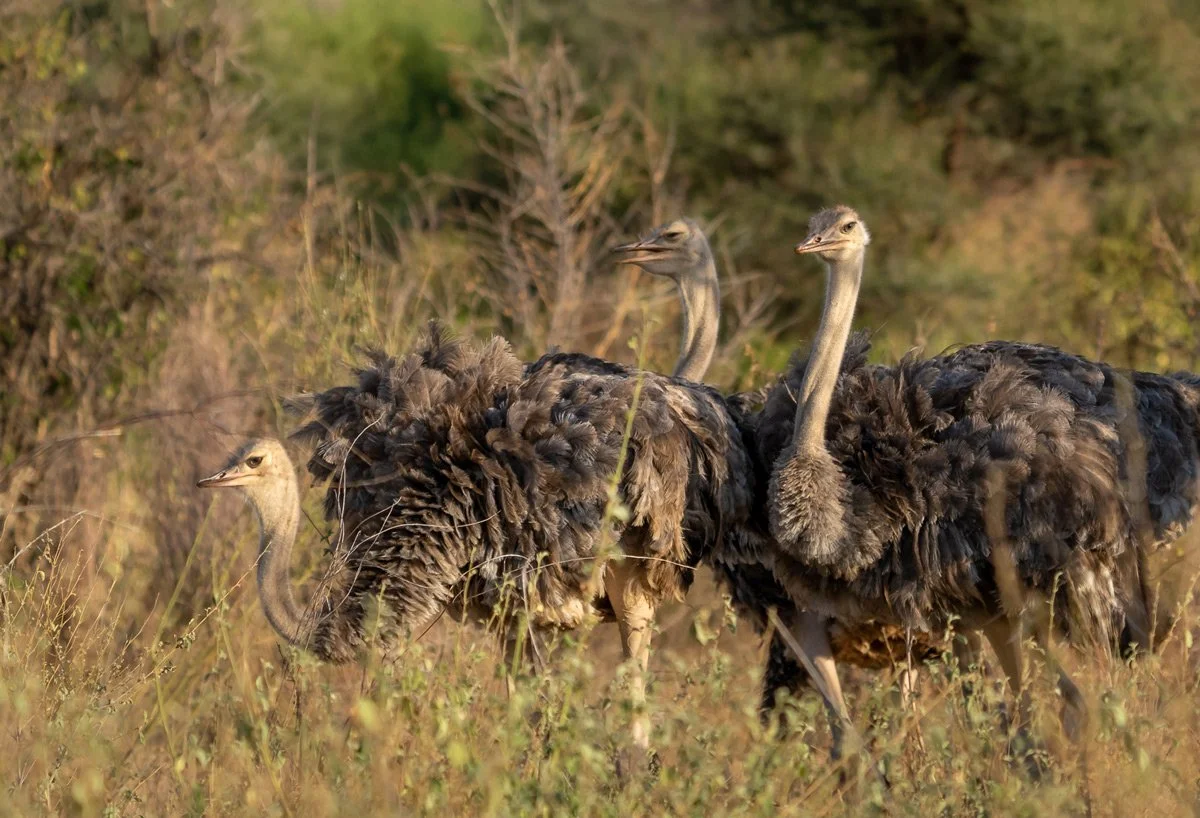
Somali ostrich: This large, flightless bird is distinguished by its blue-grey neck and legs.
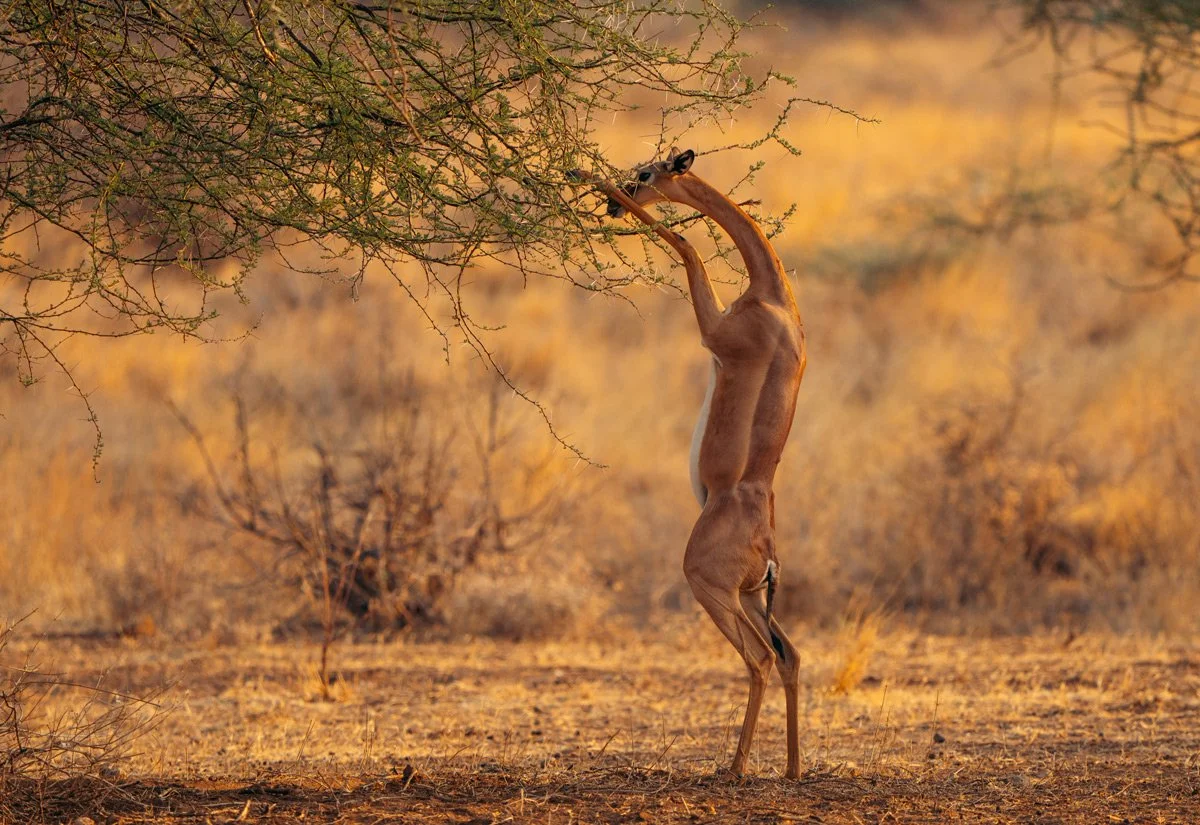
Gerenuk: A long-necked antelope famous for standing on its hind legs to reach leaves and branches high above the ground.